Point 1: I don’t necessarily feel it. Sure the mansory layout is very cool, but I see it as improvement, not “game changer”
I see where you’re coming from. I would like to try to convince you with a few examples, because the point I’m trying to make is less about the specific masonry board, and more about letting notes become more than the sum of their parts. I think once I can explain better, you might like the feel for it.
The core concept that I’m going to try to prove is: Great value can be gained by looking at a collection of notes as a gestalt.
==========
My first example is of the user experience of browsing photos. Here are two applications browsing the same collection of files:
Application One: A list of photos with a myriad of information about each photo.
This is obviously a terrible way to browse photos, but I want you to ask yourself why it’s terrible. The images are perfectly accessible. You have plenty of information about the photo including its date, title, location, tags, and a preview is only a click away.
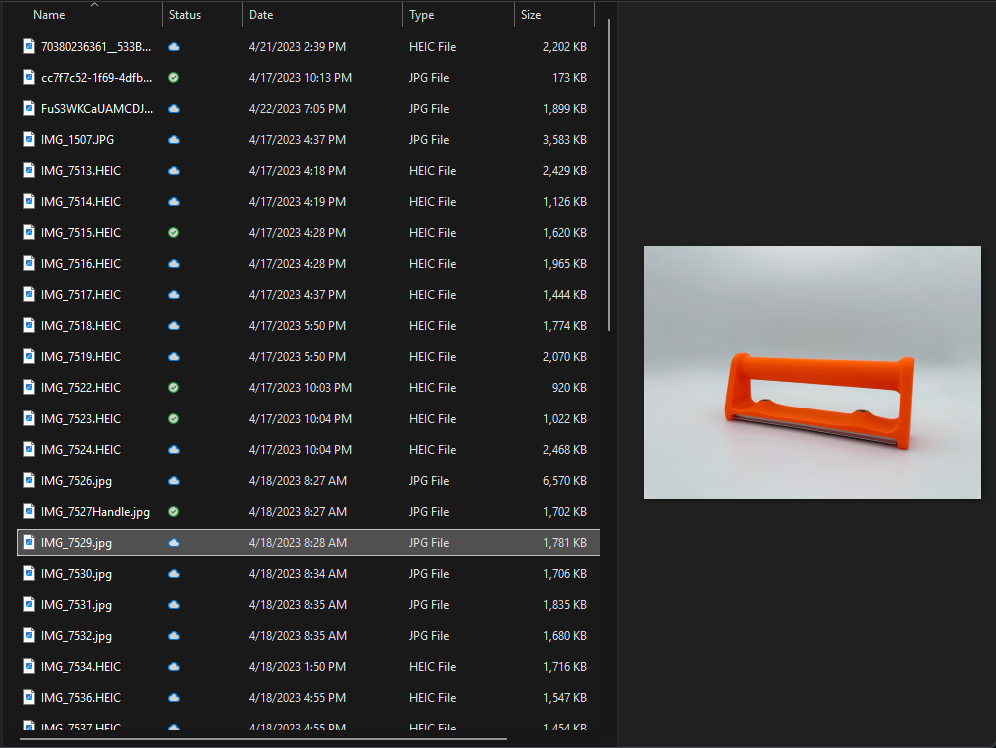
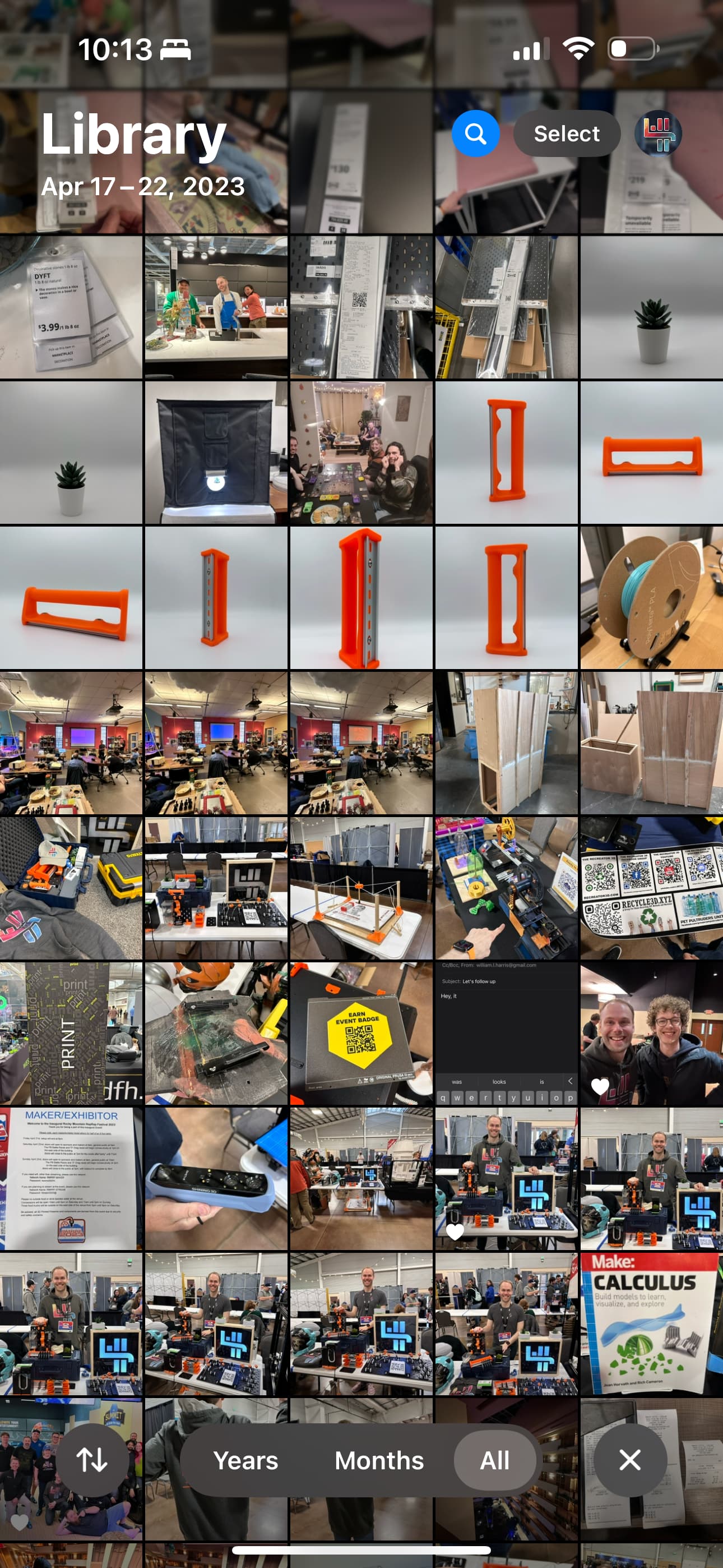
Application Two: The view from my photos app, conveys infinitely more. It shows the content of the photo, because that’s what’s important. It shows the context of the photo, because that’s what is valuable.
When I look at this group of photos, I remember the first time showing my work professionally at a convention, and I even met Stefan! I realize I haven’t talked to my friend Chris in too long. I had forgotten that he was there too. I was just playing around with my new lightbox, and I realize I still haven’t published the changes I made to my PTFE joiners.
Even just by looking at it, the application tells a story. Memories and ideas come flooding into my mind, and it’s all because I am viewing not just one photo at a time, but the collection of photos at once. The collection becomes a gestalt; more than the sum of its parts.
So why am I using this as an example?
It’s because the same is true for notes! Viewing a list of just the titles and properties of notes will never be enough to view your collection of notes as more than individual scraps. Just like in photographs, it’s the content of the note that matters. And if you can view the content of your notes surrounded by the context given by your collection, then you graduate from just remembering, to actually thinking with your notes.
==================
I want to give you a second example, and this one comes from physical notebooks.
In a notebook, any individual note is surrounded by the other notes you’ve taken close to the same time. When you review a note, the surrounding content reminds you of the background context from when you recorded the note. A collection of notes becomes a gestalt that conveys more than just what you write.
Often in a physical notebook, the context of the environment leaks into the note. For instance, consider if you need to write down a person’s phone number, and borrow that person’s blue pen. It becomes easier to locate that note because you know to look for blue ink instead of your standard pencil. Such little details become a memorable landmark because of the noise of everyday life.
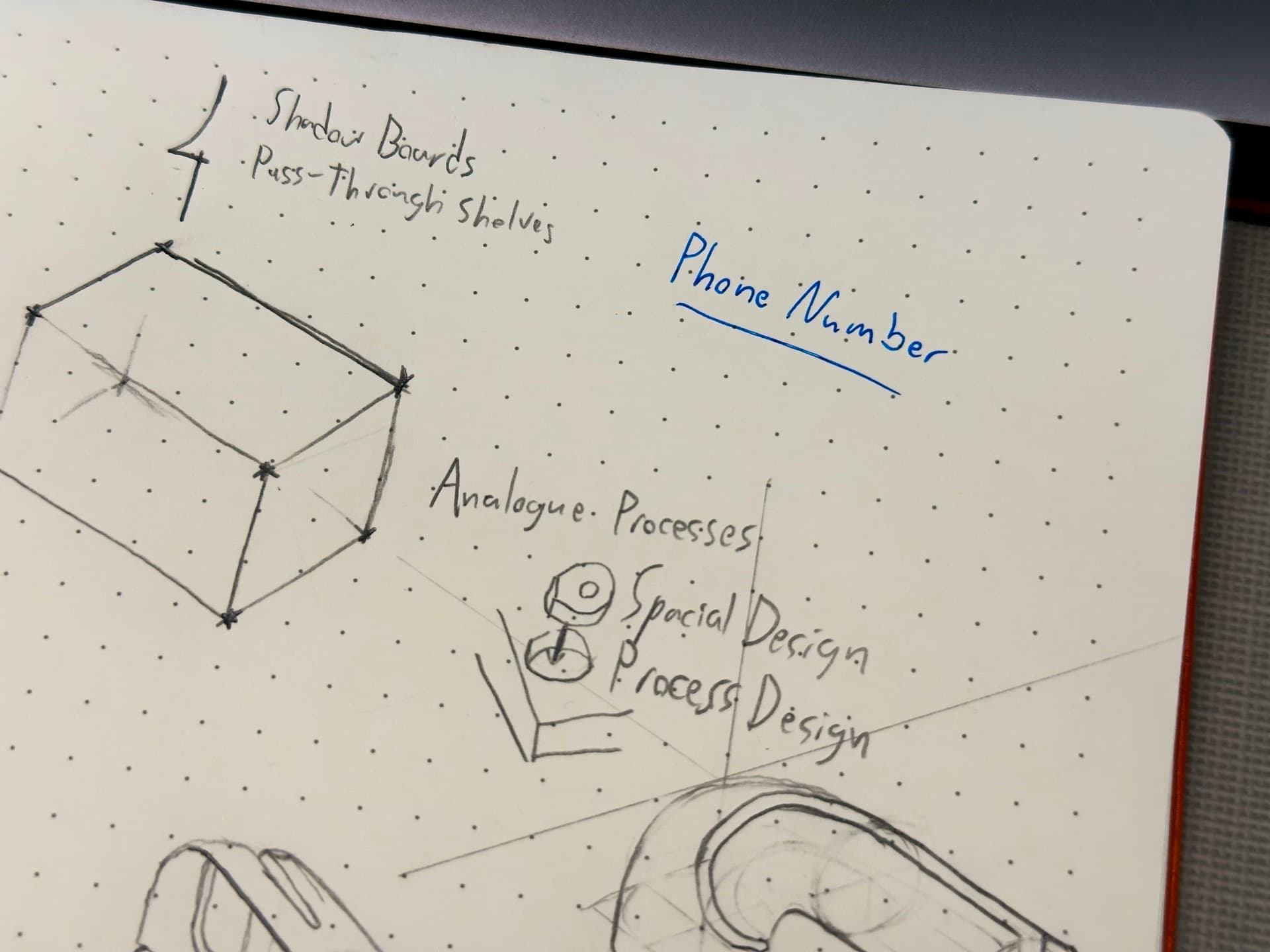
By its context, it gains more information density than the written text itself.
=======================
Lastly, I want to revisit the masonry board with, hopefully, a new outlook of why it brings so much value. I cannot leave Google Keep because my written notes there come alive in a way that no other application has been able to beat.
Why does Keep beat all these other applications? It’s the same reasons as the examples above. Because it lets me view my notes in context with my collection, and it prioritizes the content of the note.
In user-experience design, the ultimate goal is to make an experience that disappears because it seems so simple and intuitive. Google has made their design work disappear in a way that lets you forget about the designer and work involved, and conveys notes more clearly than anything else so far.
So imagine my disappointment with how Google could pull the rug out from under me at any moment. It’s why I have to get out of Keep. I have to find an application with the contextual browsing style of Google Keep, the editing UI and native databases of Notion, and the self-hosted backend and extensibility of Obsidian. Right now, the closest is still AnyType, and I have high hopes.
Having read this, I’d like you to take a second look at my writing above about what Google Keep did right as an example. I hope it can convey how important this aspect of note-taking applications is.
===================
Point 3: What is your operating system? I can make or share what I use to migrate all my images to anytype (converting to webp, generating a “cover format” and also a thumbnail/icon from an image).
Thanks! I’d be eager to figure out a programmatic way out of this. I primarily use Windows, but have easy access to OSX and whatever Linux distro I feel like putting in a docker container (Ubuntu is closest at hand).